
Pricing specific to each customer
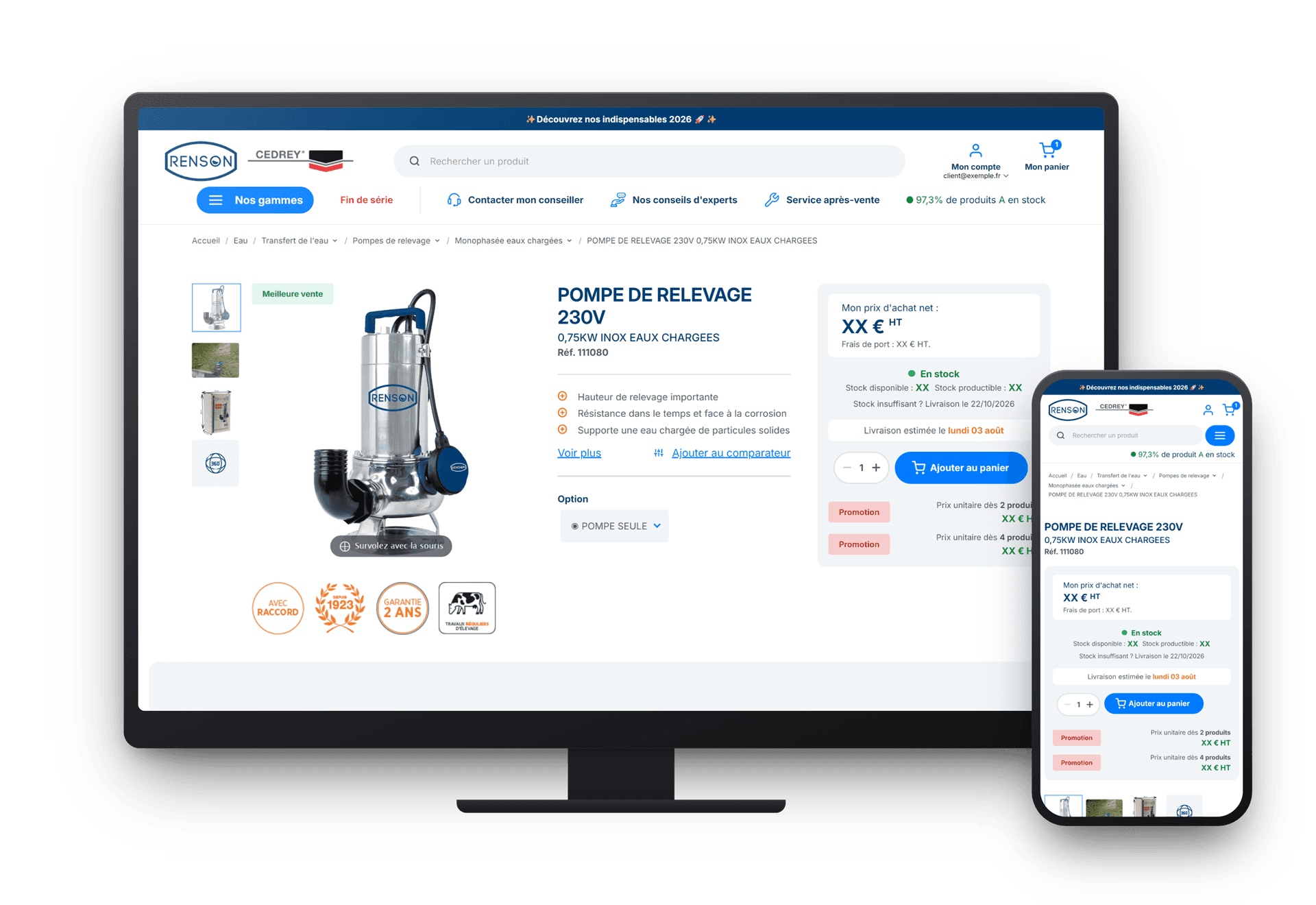
A signed-in distributor sees their own net purchase price, not a list price. Quantity breaks appear on the product page — unit price from two or four items — making the value of grouping an order visible.
Renson
Renson supplies transfer solutions (pumps), storage solutions (tanks) and treatment solutions (filters) to a network of trade professionals. Its online ordering platform runs on the ERP's own data, with no duplicate entry.
In trade distribution, an online catalogue is only worth having if it tells the truth. A distributor doesn't order at list price: they order on their negotiated terms, for items whose real availability they must know before committing to their own customer.
All of that already lives in the ERP. The point of the project was therefore not to recreate it, but to expose it as-is on the web — and to make sure anything ordered online returns to the business management system without being re-keyed.
A signed-in distributor sees their own net purchase price, not a list price. Quantity breaks appear on the product page — unit price from two or four items — making the value of grouping an order visible.
Every product page separates available stock from producible stock, and offers a replenishment date when the required quantity exceeds what's on the shelf. The catalogue can be filtered down to in-stock items only.
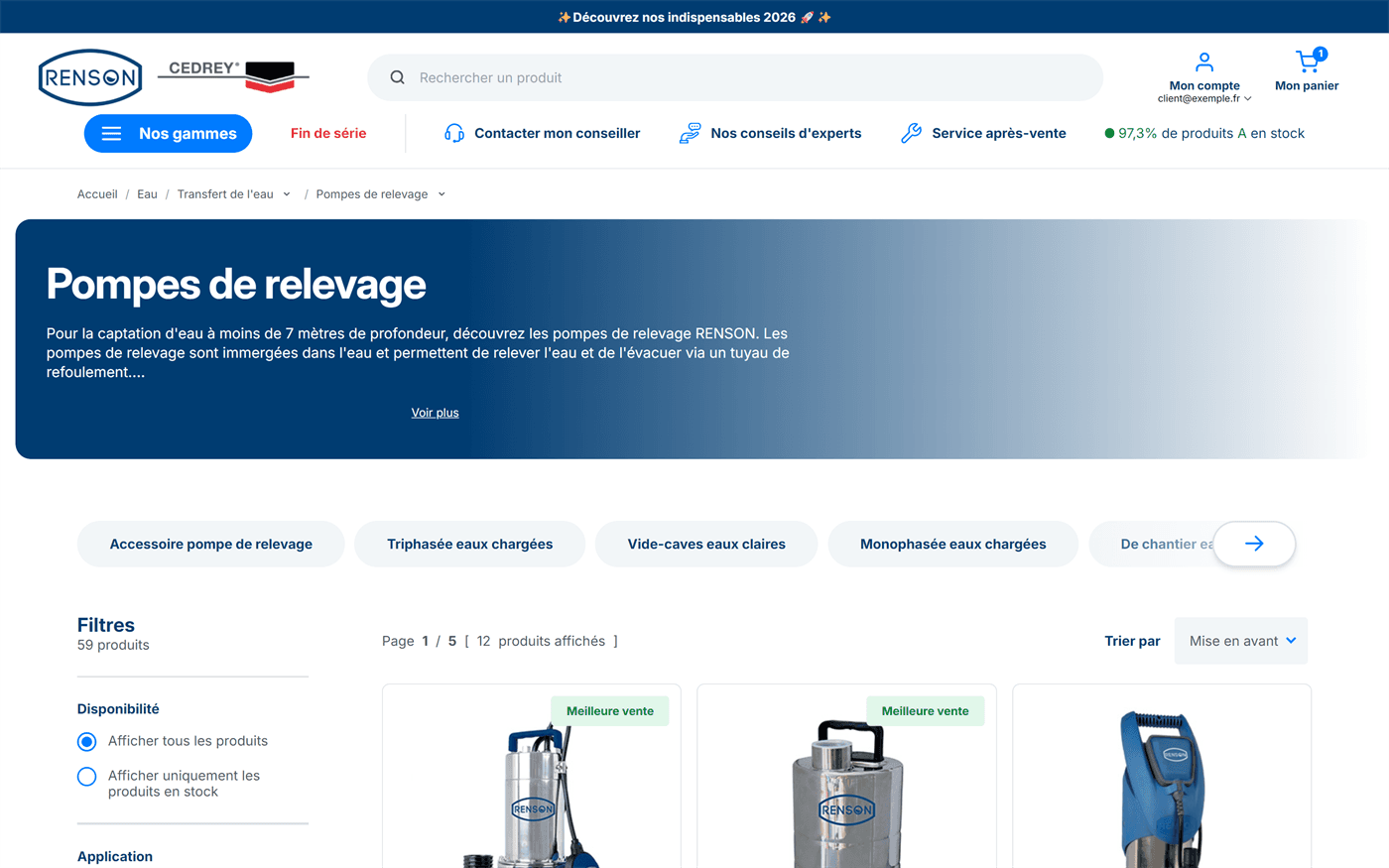
The tree mirrors the business management system's product families, from top-level domain down to sub-family. Filters by use case, sorting, a comparison tool, suggested accessories and technical documentation round out each page.
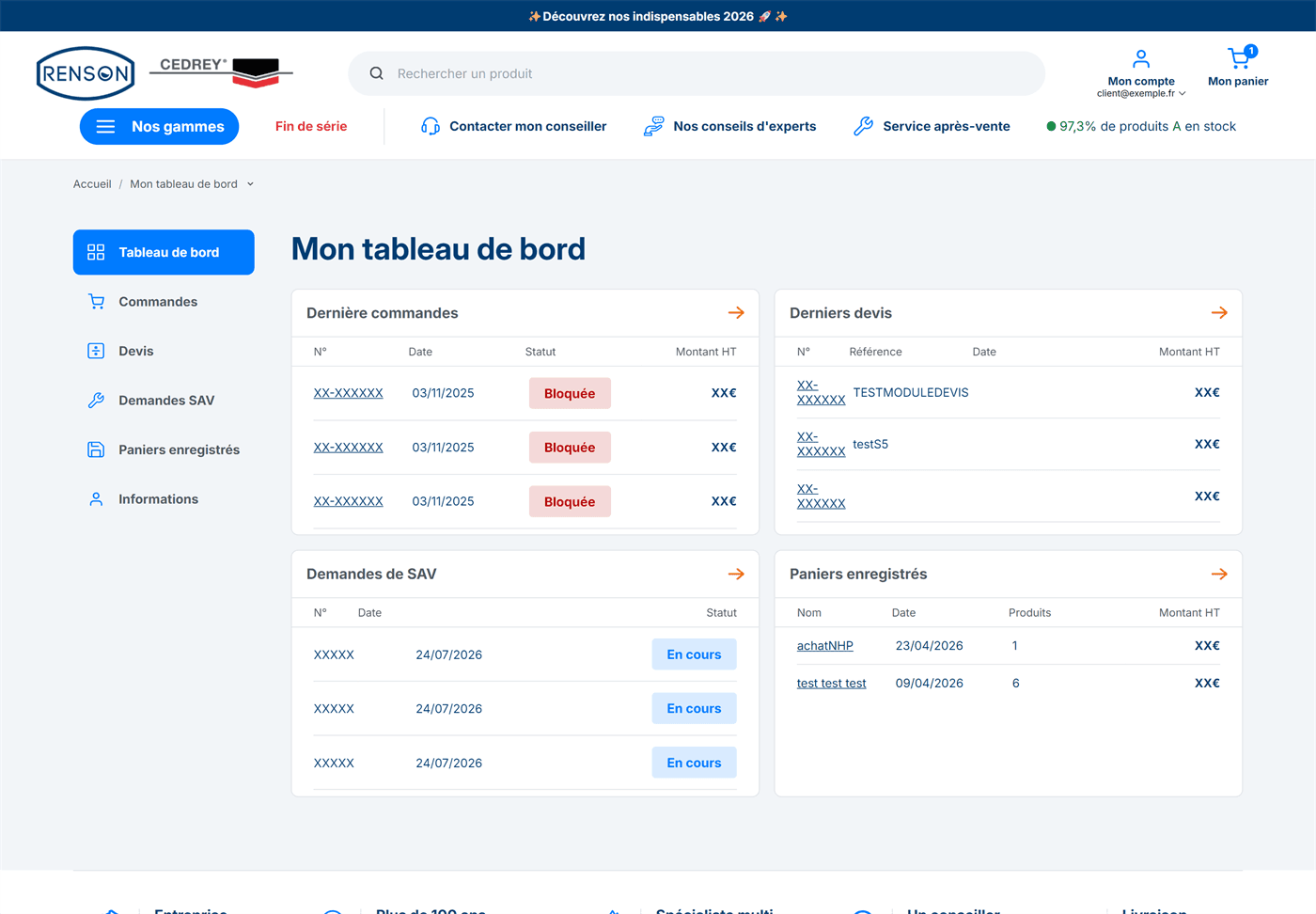
Orders with their status, quotes, after-sales requests, saved baskets and account details: the distributor tracks their paperwork without phoning their account manager.
An order confirmed on the site becomes a document in the business management system, with its number and status. The tracking shown to the customer is the ERP's own, not a copy that drifts over time.
Promotions, end-of-line items, expert guides and a "become a distributor" path sit alongside the catalogue: the site serves both loyalty within the existing network and the recruitment of new resellers.
The site doesn't own the commercial truth — it reflects it. Product reference data, pricing grids and stock levels are fed from Sage X3, and orders taken online are integrated back into it automatically.
The visual identity and interface design were produced by our partner blaaaz.com. Hexit handled the development of the platform and its interface with the business management system.